The Ha Giang Loop weather changes dramatically across all 12 months, split into a dry season (October–April) ideal for riding and a rainy season (May–September) that brings significant road hazards. Hereafter, this guide breaks down the Ha Giang Loop weather month by month, compares all four seasons across the criteria that matter most to riders, and reveals the rare seasonal phenomena from the buckwheat flower bloom to the cloud sea at dawn that transform a great motorcycle trip into an unforgettable one.
What Is the Weather Like on the Ha Giang Loop?
The weather on the Ha Giang Loop is strongly influenced by its mountainous landscape. Much of the route runs across a high-altitude karst plateau between 800 and 1,600 meters above sea level. Because of this elevation, temperatures are often cooler than in Vietnam’s lowland regions, and weather conditions can change quickly between valleys and mountain passes.
In general, the Ha Giang Loop has two main seasons. The dry season, which typically runs from October to April, brings cooler temperatures, lower humidity, and relatively stable road conditions. Rainfall is limited during these months, making it easier and safer for motorbike travel.
The wet season lasts from about May to September and is driven by the southwest monsoon. Heavy rain can occur frequently during this period, sometimes causing slippery roads, foggy mountain passes, and occasional landslides. Understanding how these seasonal patterns shift throughout the year helps riders plan the safest and most enjoyable time to explore the loop.
The Temperature and Rainfall Ranges Across the Year
The table below summarises the average temperature range (°C), monthly rainfall (mm), and overall riding suitability for each month of the year on the Ha Giang Loop.
| Month | Avg. Low (°C) | Avg. High (°C) | Rainfall (mm) | Riding Suitability |
|---|---|---|---|---|
| January | 5 | 16 | 20 | Moderate (cold, clear) |
| February | 7 | 18 | 30 | Moderate (cold, improving) |
| March | 12 | 22 | 40 | Excellent |
| April | 15 | 26 | 70 | Very Good |
| May | 18 | 28 | 130 | Caution (rain starting) |
| June | 20 | 29 | 210 | Poor (peak rain begins) |
| July | 21 | 30 | 260 | Poor (most dangerous) |
| August | 21 | 30 | 240 | Poor (flash flood risk) |
| September | 19 | 28 | 150 | Moderate–Good (easing) |
| October | 15 | 25 | 70 | Excellent |
| November | 10 | 22 | 35 | Excellent |
| December | 6 | 17 | 20 | Moderate (cold) |
Which Months Are the Best to Ride the Ha Giang Loop?
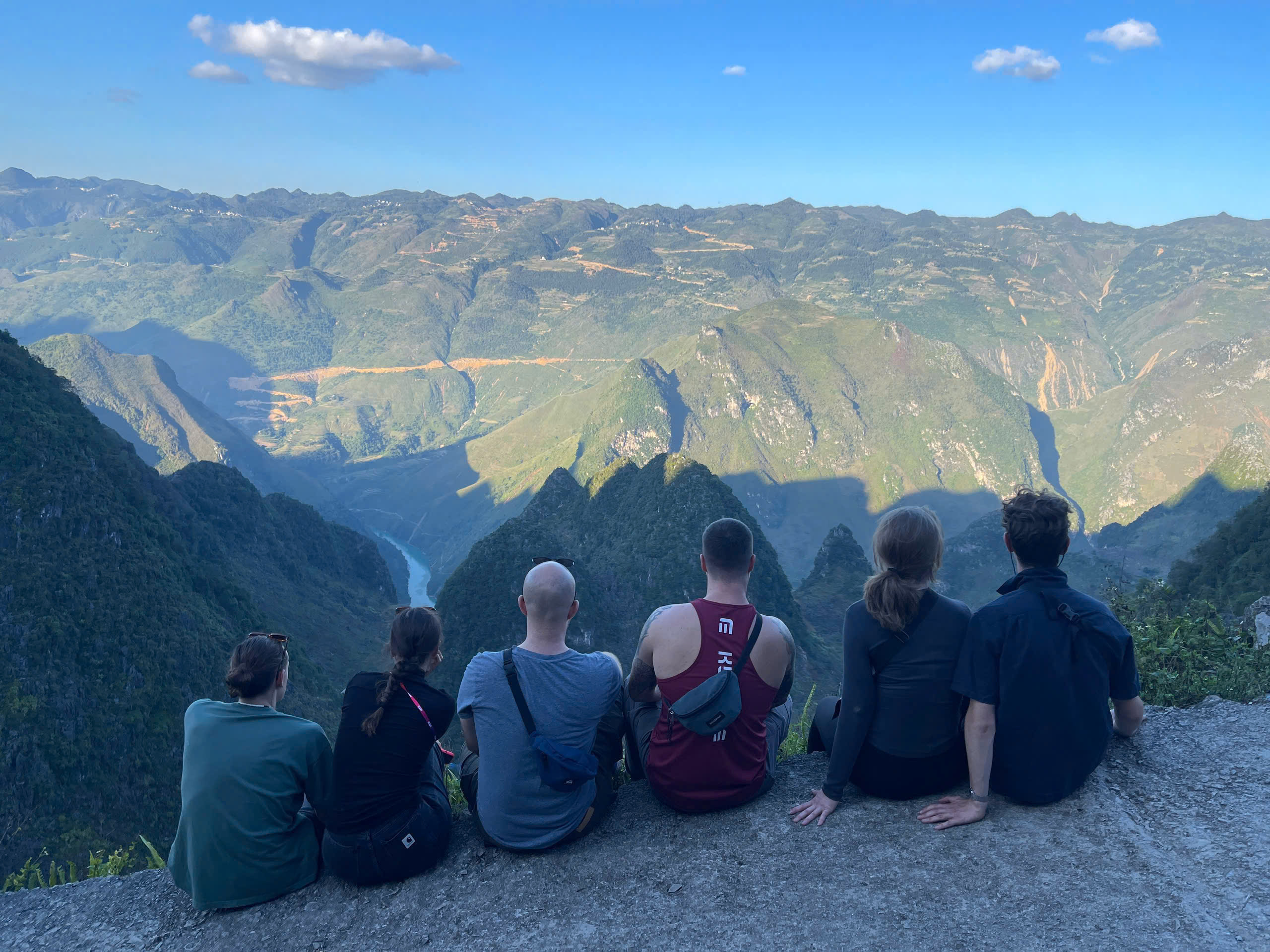
The best months to ride the Ha Giang Loop are October, November, March, and April four months that consistently offer the most favourable combination of stable road conditions, manageable temperatures, reduced rainfall, and iconic seasonal scenery. Within this group, October and November edge ahead for most riders due to the harvest-season landscape, while March is the single strongest month for those prioritising flower scenery and spring light.
September to November
September to November is widely considered the best time of year to ride the Ha Giang Loop. During these months, the region transitions out of the heavy summer rains, creating much safer and more enjoyable riding conditions. Rainfall drops significantly compared to June–August, and many of the mountain roads begin to dry out. Local authorities usually repair or clear most landslide damage from the peak rainy season by early September, making the main loop routes more reliable for travelers on motorbikes.
September marks the beginning of the harvest season across the northern highlands. The terraced rice fields gradually turn from green to a deep golden color, transforming the hillsides into one of the most photogenic landscapes in Vietnam. By mid to late October, the rice terraces in districts like Hoàng Su Phì and Xín Mần reach their peak beauty. This is when photographers and nature lovers often plan their trips to capture the glowing fields stretching across the mountains.
October also brings some of the most comfortable riding weather of the year. Daytime temperatures usually range between 22°C and 25°C, which is cool enough for long days on the road without the exhaustion that comes from summer heat. The air is clearer as well, meaning mountain passes and viewpoints offer better visibility.
In November, the scenery changes again with the arrival of buckwheat flower season around Đồng Văn and the northern limestone plateau. Small pink and purple flowers bloom across rocky hillsides for several weeks, creating a unique landscape that only appears once a year.
Because this period is so popular, accommodation can fill up quickly. It is a good idea to book homestays or guesthouses two to three weeks in advance, especially in towns like Dong Van and Meo Vac.
March to May
March to May marks the spring season in Ha Giang and is often considered the second-best time of year to ride the Ha Giang Loop. During these months, the weather is generally mild, the roads remain dry from the winter period, and the landscapes come alive with seasonal blossoms. Compared to the peak autumn travel window, spring offers a quieter and more relaxed experience with fewer tourists on the road.
March is particularly beautiful because peach and plum trees across the mountain slopes begin to bloom. Hillsides and valleys become dotted with soft pink and white flowers, creating a striking contrast against the dark grey limestone mountains typical of the Dong Van Karst Plateau. For photographers and travelers who enjoy scenic riding, this short blossom season provides a unique and colorful landscape that only appears for a few weeks each year.
Weather conditions in March are also very comfortable for riding. Average daytime temperatures usually range from around 20°C to 23°C, which allows riders to explore the loop throughout the day without the intense heat of summer or the cold conditions of winter mornings. Clear skies are also fairly common during this time, offering good visibility at major viewpoints and mountain passes.
By April, rainfall gradually begins to increase, typically reaching around 80–100 mm for the month. However, the rain is usually light and short-lived, often arriving as brief afternoon showers rather than heavy all-day storms. Mornings are typically dry, making it easy to plan daily riding segments earlier in the day.
May sits on the edge of the rainy season. While travel is still possible, rainfall becomes less predictable, so riders should keep an eye on weather forecasts and allow some flexibility in their itinerary.
Which Months Should You Avoid Riding the Ha Giang Loop?
Riders should avoid the Ha Giang Loop during June, July, and August with the strongest caution, as these three months represent the peak wet season when road hazards reach their most dangerous levels — making the route genuinely unsafe for most riders, particularly those without extensive experience on unpaved mountain roads. December through February requires a different kind of caution: not rain-related danger, but cold-related physical risk at high altitude.
June – August
June to August is the peak rainy season in Ha Giang, and it is generally considered the most challenging time of year to ride the Ha Giang Loop. During these months, rainfall reaches its highest levels of the year, often ranging from around 230 to 280 mm per month. Heavy rain can trigger landslides along mountain roads, and certain sections of the loop may temporarily become difficult or unsafe to navigate.
One of the main concerns during the rainy season is road conditions. Many mountain passes and rural roads in Ha Giang are covered with red clay soil. When intense rain falls, this surface can quickly turn slippery, making it difficult for motorbikes to maintain traction. Visibility can also become a serious issue. Thick fog combined with steady rain sometimes reduces visibility to less than 50 meters, especially along high mountain passes.
Some areas of the loop are particularly prone to problems during this time. Sections near Deo Can Ty and parts of the route toward Lung Cu can experience mudslides or debris washing across the road after heavy storms. Smaller dirt roads leading to remote villages may also become muddy or partially flooded. In addition, trucks carrying limestone or construction materials are more active during the summer months, increasing traffic on narrow mountain roads.
Despite these challenges, the rainy season does have its own unique beauty. The mountains turn a deep, vibrant green, and waterfalls appear along rock cliffs that remain dry during other parts of the year. The air after rainfall is also incredibly clear, often revealing dramatic views across the valleys.
If you decide to ride during this period, preparation is essential. Always check local road conditions before leaving each morning, carry reliable waterproof gear, and consider riding a manual motorbike for better control on slippery terrain. Riding after dark should always be avoided in rainy conditions.

December – February
December to February is the winter season in Ha Giang. While this period is generally safer than the rainy summer months, it brings a different set of challenges that riders should prepare for carefully. The biggest factor is temperature. In the higher parts of the Ha Giang Loop, especially at elevations around 1,500 meters, nighttime and early morning temperatures can drop below 5°C. Combined with strong mountain winds, the windchill during long rides can make the air feel even colder.
Despite the cold, winter has one clear advantage: rainfall is very low. Monthly precipitation usually ranges from only 25 to 50 mm, meaning the roads are typically dry and landslides are rare. Compared to the summer rainy season, road stability is generally much better. However, in December and January, frost or thin layers of ice can occasionally form on the road surface during the early morning hours, particularly in shaded areas and on bridges.
Another common winter condition in Ha Giang is dense morning fog. In many mountain sections, fog can reduce visibility until around 9 or even 10 a.m. This makes early-morning riding risky, especially on narrow passes and winding cliffside roads.
Because of these conditions, proper gear is essential for winter travel. Riders should wear a windproof outer jacket, insulated gloves, and thermal base layers to stay warm during long stretches on the road. A balaclava or thermal head covering inside the helmet can also help protect against cold wind at higher elevations.
A practical strategy is to start riding later in the morning once the fog begins to clear and any frost has melted. Checking road conditions with local guesthouses before departing is also a good habit during winter months.
How Does Ha Giang Loop Weather Compare Season by Season?
Each season on the Ha Giang Loop offers a different riding experience, and the best time to visit depends largely on your priorities as a traveler. Weather conditions, scenery, road safety, and crowd levels all change significantly throughout the year.
Autumn (September–November) is widely regarded as the best overall season. The weather is comfortable, rainfall drops sharply after summer, and the landscapes reach their most spectacular period with golden rice terraces and buckwheat flowers across the highlands.
Spring (March–April) is a close second. Temperatures remain mild and rainfall is still relatively low, while peach and plum blossoms add soft pink and white tones to the mountain scenery. This season also tends to be quieter, making it ideal for travelers who prefer a more relaxed atmosphere.
Winter (December–February) has the lowest rainfall of the year, but colder temperatures, morning fog, and occasional frost require extra preparation. Meanwhile, summer (May–August) brings lush green landscapes but also heavy rain and more difficult riding conditions.
Ethnic Minority Festivals in Ha Giang Align With the Best Riding Seasons
One of the unique aspects of riding the Ha Giang Loop is the chance to experience the vibrant culture of the region’s ethnic minority communities. Interestingly, several of the most important local festivals occur during the best riding seasons of the year. This means travelers can combine spectacular mountain scenery with authentic cultural experiences that are rarely found in more mainstream destinations.
Below are three notable festivals that riders may encounter while traveling the loop:
- Đồng Văn Saturday Market (from October to March)
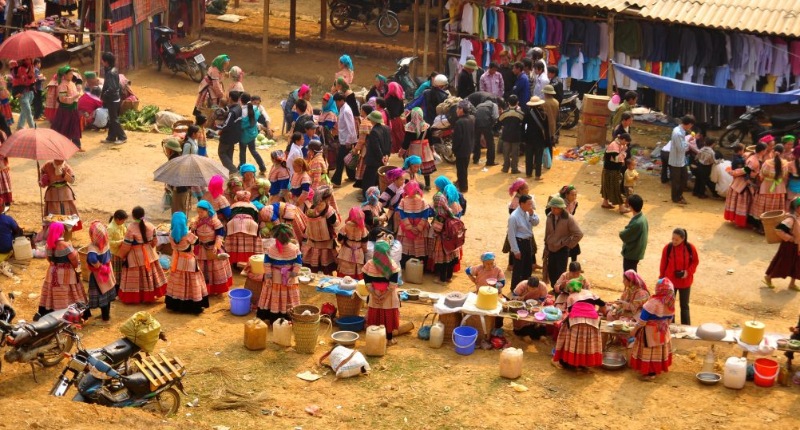
Held every Saturday morning in the town of Đồng Văn, this traditional market is a major social gathering for local communities such as the H’Mông, Lô Lô, and Giáy. Villagers travel from surrounding mountain areas to trade goods, buy supplies, and meet friends and relatives. Visitors can see colorful traditional clothing, handmade silver jewelry, woven textiles, and a wide variety of local foods. If your loop itinerary passes through Đồng Văn on a Saturday morning, it is well worth stopping to explore the lively atmosphere. - H’Mông Khèn Festival (January–February)
This cultural celebration centers around the khèn, a traditional bamboo wind instrument played by H’Mông men. Performances often take place in village squares or open hillsides, accompanied by dancing and local gatherings. Riders traveling during the late winter or early spring season may unexpectedly encounter these celebrations while passing through villages in the Đồng Văn area. - Buckwheat Flower Festival (October–November)
Organized annually by Ha Giang Province, this festival celebrates the famous buckwheat flower season across the Đồng Văn Karst Plateau. Events typically include folk music performances, local food markets, and traditional games. Because the festival attracts many visitors, accommodation along the loop can fill up quickly, so booking at least three to four weeks in advance is highly recommended.