The seasonal festivals in Ha Giang Loop follow a living calendar shaped by 19 ethnic minority communities H’Mông, Tày, Dao, Lo Lo, Pa Then whose ceremonies have marked harvests, seasons, and rites of passage across these limestone mountains for centuries. From the sacred Gau Tao Festival in January to the iconic Buckwheat Flower bloom in October, each season reveals a completely different version of the Loop.
Most travelers ride Ha Giang for the roads. The ones who time their journey around its festivals ride away with something harder to forget: khen flute music drifting through valley mist, a seat at a Long Tong harvest feast, markets where silver jewelry and hand-embroidered cloth signal identity rather than commerce.
This Ha Giang Hostel guide maps every major festival by season when it happens, where on the Loop it falls, what to experience, and how to prepare so your ride arrives at the right village, at the right moment.
What Are the Seasonal Festivals on the Ha Giang Loop?
Seasonal festivals on the Ha Giang Loop are community-organized ceremonies and celebrations tied to the agricultural calendar, ethnic spiritual traditions, and natural cycles of the highland region, rooted in the cultures of more than 19 ethnic minority groups living across the Đồng Văn Karst Plateau and surrounding districts.
Unlike festivals in Vietnam’s lowland cities which often center around the national Lunar New Year — Ha Giang’s festivals follow a more complex, multi-ethnic calendar. The H’Mông celebrate their own New Year in December on the lunar calendar, weeks before Tết Nguyên Đán. The Tày hold the Long Tong Festival in February to open the farming season. The Pa Then perform the Fire Jumping Ceremony in October after the harvest. Each group marks time differently, which means the Loop is alive with cultural events in almost every month of the year.
Across the four seasons, festivals on the Ha Giang Loop fall into three broad categories:
- Agricultural festivals tied to planting and harvest cycles (Long Tong, harvest rituals in Hoàng Su Phì)
- Spiritual and coming-of-age ceremonies tied to belief systems and community identity (Gau Tao, Cap Sac, Fire Jumping)
- Social and romantic gatherings tied to courtship and community bonds (Khau Vai Love Market, Hmong New Year markets)
Seasonal Festivals Take Place on the Ha Giang Loop Each Year
Six major festival clusters define the Ha Giang Loop’s cultural calendar. Each one belongs to a specific ethnic group, a specific location on the Loop, and a specific season.
Below is a season-by-season breakdown of every major festival with its location, ethnic group, and key dates.
1. Gau Tao Festival
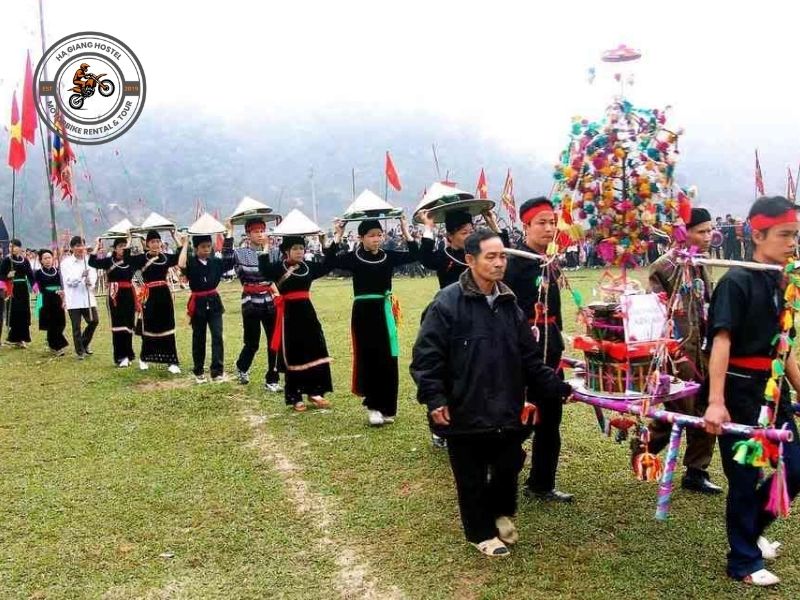
The Gau Tao Festival runs from the 1st to the 15th day of the first lunar month, making it the largest and most sacred celebration of the H’Mông people. Held in open highland fields near Đồng Văn, the festival centers on two main rituals: erecting a wooden tree to pray for fertility and a flower tree to wish for peace and good health. Throughout the two-week period, visitors witness:
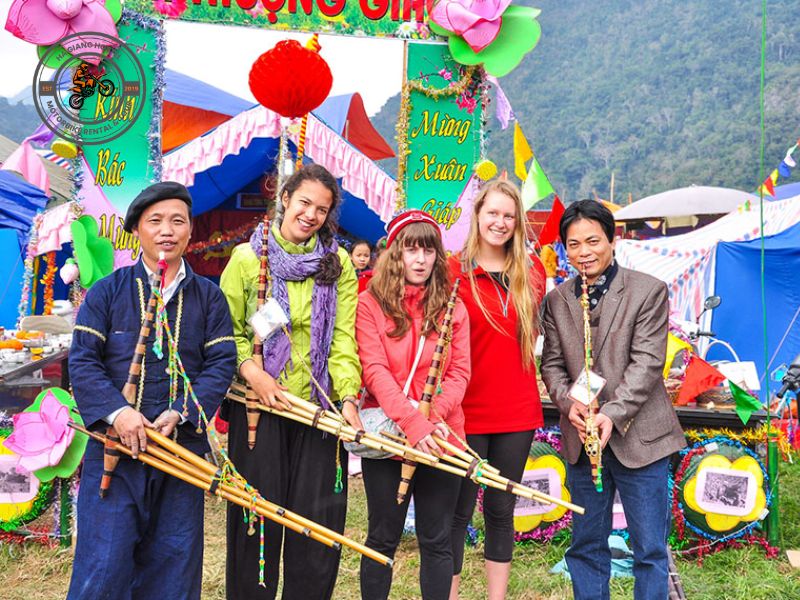
- Khen flute performances: H’Mông men play the bamboo khen in spiraling dances that carry spiritual significance, this is not performance, it is prayer in motion.
- Traditional games: Spinning thread contests, archery, and yến fighting (a form of badminton using a weighted shuttlecock) fill the festival grounds.
- Highland markets: Handwoven textiles, silver jewelry, and fermented corn wine appear at informal stalls surrounding the ceremonial area
2. Long Tong Festival
The Long Tong Festival, meaning “Going to the Field,” marks the start of the farming season for the Tày ethnic group in Quan Ba and Bắc Mê districts. Held in February on the lunar calendar, the ceremony begins with a communal offering at the edge of rice fields — villagers pray to the gods of agriculture and water for good weather and abundant harvests.
After the ritual, the celebration expands into:
- Hát Then singing: Traditional Tày vocal performances accompanied by the đàn tính (a plucked lute), regarded as a form of communication with the spirit world
- Folk games: Tug-of-war, sack racing, and boat racing on local rivers
- Community feasts: Tables laid with sticky rice, bamboo-shoot dishes, and freshwater fish from nearby streams
3. Khau Vai Love Market
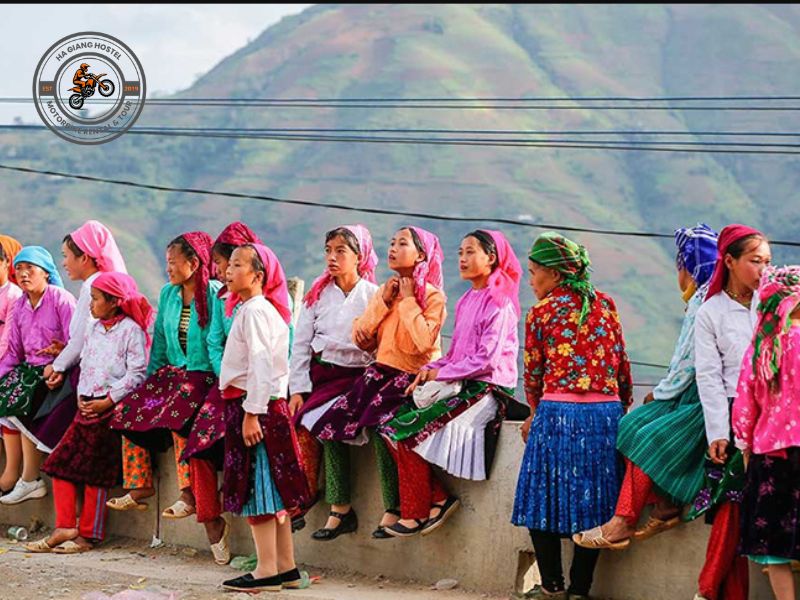
The Khau Vai Love Market takes place on the 27th day of the third lunar month in Khau Vai commune, Mèo Vạc District — roughly a 45-minute ride from Mèo Vạc town along the Loop. Unique to this market: it reunites men and women who once loved each other but could not marry, allowing them one day each year to meet, share memories, and reconnect without social judgment.
Beyond the romantic folklore, the market functions as a major ethnic gathering with:
- Live performances of folk songs and instrument music from H’Mông, Tày, Dao, and Giáy groups
- Stalls selling hand-embroidered clothing, medicinal herbs, and highland agricultural tools
- Food vendors offering thắng cố (horse meat hotpot), bánh tam giác mạch (buckwheat cake), and black corn wine
4. Buckwheat Flower Festival
Organized by Hà Giang Province across Đồng Văn, Mèo Vạc, and Quản Bạ districts, the Buckwheat Flower Festival celebrates the annual bloom of tam giác mạch (buckwheat), a hardy grain that flowers pink and purple across the limestone plateau when temperatures drop in October. The festival combines natural spectacle with cultural programming:
- Photo contests: Professional and amateur photographers compete in designated bloom fields; some of the most-photographed locations include Lũng Cú plateau, Phố Cáo commune, and the road approaching Đồng Văn Old Quarter.
- Ethnic music performances: H’Mông and Lo Lo musicians perform in traditional costumes at the festival grounds in Đồng Văn
- Buckwheat food fair: Try bánh tam giác mạch (a dense, slightly bitter flatbread), mèn mén (buckwheat porridge), and buckwheat-infused corn wine — all made from the same grain that colors the hills
5. Harvest Rituals
In Hoàng Su Phì district — the southwestern section of the Loop — Dao and Tày communities hold informal harvest ceremonies as rice terraces ripen gold. These are not ticketed events or organized festivals.
They are working ceremonies: families invite neighbors and extended kin to help cut and thresh rice, sharing meals and rice wine across multiple days. Travelers who stay in homestays in Hoàng Su Phì during late September and early October sometimes receive invitations to participate in harvest work — one of the most authentic and least-documented experiences available on the Loop.
6. Hmong New Year (Noj Peb Caug)
Hmong New Year falls on the 1st day of the 12th lunar month typically between late November and mid-December — marking the end of the harvest season and the start of a new agricultural cycle. This is a separate event from Tết Nguyên Đán and predates it by six to eight weeks.
Key distinctions:
- Hmong New Year celebrations occur in villages and open hillsides near Đồng Văn and Mèo Vạc, not in town centers
- The atmosphere is communal and informal — families wear their finest silver-embroidered clothing, young people play pov pob (courtship ball-tossing), and elders conduct ancestral rituals inside homes
- Corn wine flows freely; visitors who receive an invitation to enter a home during this period should accept
7. Tet Nguyen Dan in the Highlands
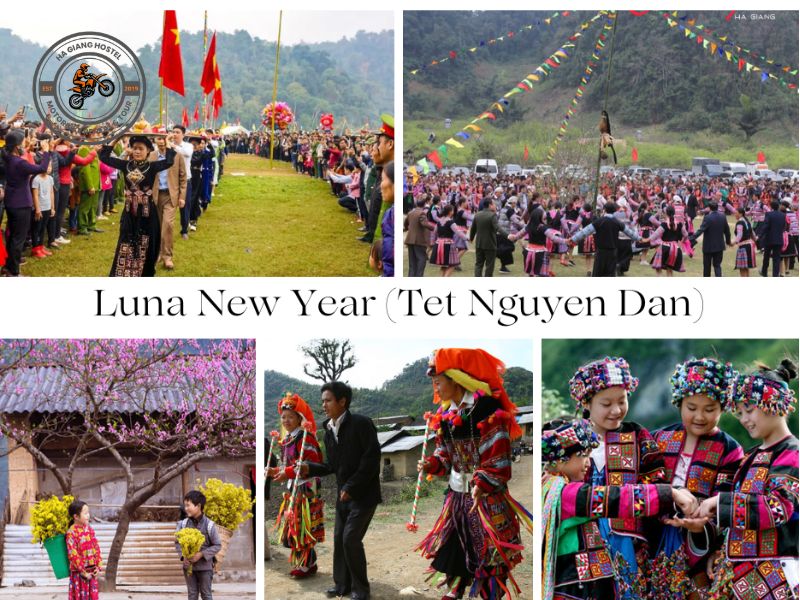
Tet in Ha Giang offers a starkly different atmosphere from Tet in Hanoi or Ho Chi Minh City. The celebrations here are quieter, more intimate, and more deeply communal. Families wear traditional clothing, prepare highland-specific Tết foods — hump-shaped sticky rice cakes, mountain pork preparations, freshly distilled corn wine — and gather around fires for multi-day feasts.
However, Tet carries practical complications for travelers:
- Buses between Hanoi and Ha Giang fill up or cancel, with prices spiking significantly
- Most shops, restaurants, mechanics, and guesthouses outside main towns close for five to seven days
- If a motorbike breaks down during Tet week, repair services are largely unavailable
When Is the Best Time to Go on the Ha Giang Loop for Festivals?
Spring leads on cultural depth and festival variety; autumn leads on scenery and riding comfort. Both seasons deliver genuinely rewarding experiences the right choice depends on what you want to take away from the Loop.
Choose Spring (January – April) if you want:
- More festivals in a shorter window — Gau Tao, Long Tong, and Khau Vai Love Market all fall within 12 weeks, giving riders a natural cultural itinerary without detours
- Direct community participation — Spring ceremonies invite visitors into communal feasts, folk games, and village gatherings; the engagement level runs deeper than at organized autumn events
- Quieter roads — Fewer international tourists in January through March means guesthouses are easier to book, passes are less congested, and markets feel like local events rather than photo opportunities
- Cooler, layered riding — Temperatures from 5°C to 20°C suit riders who prefer crisp mountain air over summer heat; March and April are the sweet spot before humidity climbs
- Peach and plum blossoms — A secondary visual reward in February and March that most autumn-focused guides overlook entirely
Choose Autumn (September – November) if you want:
- The buckwheat flower bloom — Ha Giang’s most iconic visual season; fields of pink and purple tam giác mạch cover the Đồng Văn plateau in October and early November in a way nothing else replicates
- Golden rice terraces — Hoàng Su Phì’s harvest landscapes peak in late September and early October, giving photographers two distinct color palettes within a single two-week window
- The safest riding conditions of the year — Clear skies, dry roads, and temperatures between 18°C and 28°C make autumn the most forgiving season for first-time Loop riders
- The Buckwheat Flower Festival program — Ethnic music performances, food fairs, and photo contests in Đồng Văn and Mèo Vạc add organized cultural programming on top of the natural spectacle
- Harvest rituals in Hoàng Su Phì — Dao and Tày communities hold informal harvest ceremonies through late September and October; homestay guests are occasionally invited to join actual harvest work
What Cultural Activities and Rituals Are Featured at Ha Giang Loop Festivals?
Across the Loop’s major festivals, six cultural activities recur in different forms depending on the ethnic group:
1. Khen Flute Performances (H’Mông)
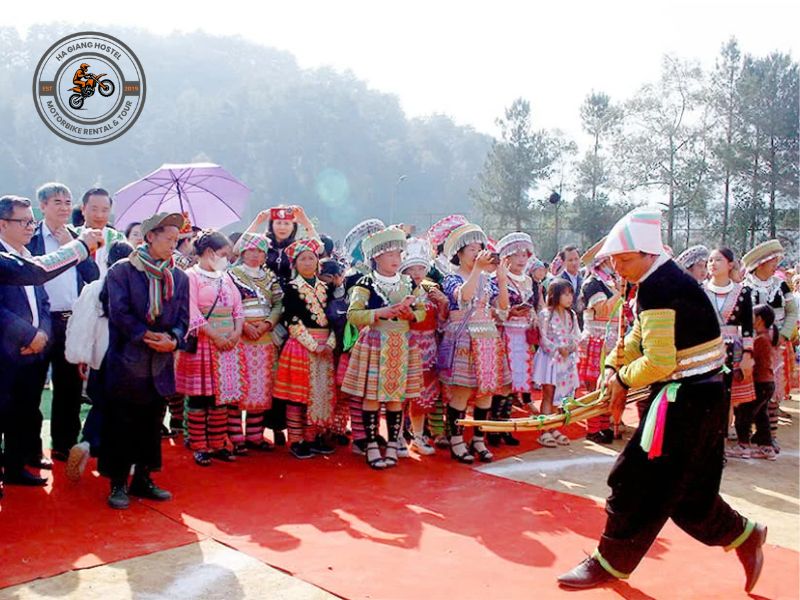
The khen — a bamboo mouth organ with six pipes — is the defining instrument of H’Mông culture. Men play while executing spinning, crouching, and leaping dances that carry spiritual meaning: the khen communicates with ancestors and spirits. Performances appear at Gau Tao, Hmong New Year, and informal village gatherings throughout spring. Visitors may watch; participating without invitation is not appropriate.
2. Hát Then Singing (Tày)
The Tày perform Hát Then — ritual singing accompanied by the đàn tính (plucked lute) — during the Long Tong Festival and Tết celebrations. Hát Then is a form of prayer-as-music, used to communicate with spirits and bless the coming farming season. UNESCO recognized Hát Then as an Intangible Cultural Heritage of Humanity in 2019.
3. Fire Jumping Ceremony (Pa Then)
Held on the 16th day of the 10th lunar month in remote Pa Then villages, the Fire Jumping Ceremony involves shamans calling upon spirits to protect dancers who leap barefoot through burning coals. This ritual is not open to visitors — it occurs deep in forest settlements far from the main Loop route and requires explicit community invitation.
4. Pov Pob Ball-Tossing (H’Mông)
A traditional courtship game where young men and women form two facing lines and toss a small cloth ball back and forth. Catching leads to conversation; dropping signals social awkwardness. The game appears during Hmong New Year and Gau Tao, and visitors are occasionally invited to join informal rounds.
5. Traditional Games at Spring Festivals
At Gau Tao, Long Tong, and Khau Vai, the following games regularly appear:
- Archery (bắn nỏ): Crossbow competitions between men from different villages
- Tug-of-war (kéo co): Community teams compete; the losing team traditionally provides a round of corn wine
- Spinning contests: Women compete in speed and quality of spinning thread — a skill tied to textile production and social status
Traditional Foods and Markets to Explore During Ha Giang Loop Festival Season
Festival season on the Ha Giang Loop centers on six foods and three market types that define highland culinary identity.
- Thắng Cố — A slow-cooked broth made from horse meat, organs, and bones with highland spices, simmered for hours in a large communal pot. Found at the Khau Vai Love Market and Đồng Văn Saturday Market. Order early — the pot empties fast.
- Bánh Tam Giác Mạch — Buckwheat flatbread, dense and slightly bitter, eaten plain or with honey. Available throughout the Buckwheat Flower Festival season in Đồng Văn and Mèo Vạc.
- Mèn Mén — Steamed buckwheat porridge, a staple food of H’Mông households. Festival versions are often flavored with rendered pork fat and served alongside pickled mustard greens.
- Xôi Ngũ Sắc — Five-colored sticky rice, prepared using natural plant dyes (red from gac fruit, purple from magenta leaves, yellow from ginger, green from pandan, white from plain glutinous rice). Featured at Tết and Long Tong celebrations.
- Rượu Ngô — Highland corn wine, distilled in village stills and served at nearly every festival gathering. Potency varies dramatically between households; taste before drinking large quantities.
- Thịt Lợn Cắp Nách — Small-breed mountain pigs, traditionally carried under the arm to market (hence the name, which translates to “armpit pig”). Roasted whole or grilled over wood fires at Tết and harvest celebrations.
Ha Giang Hostel — Quality Tours for the Ha Giang Loop Festival Season
Experiencing the seasonal festivals in Ha Giang Loop at their most authentic requires local knowledge that no travel blog can fully replicate the right village, the right day on the lunar calendar, the right guide with real community connections. Ha Giang Hostel delivers exactly that.
Based in Hà Giang city at the starting point of the Loop, Ha Giang Hostel designs tours around the actual festival calendar not approximated dates from tourist brochures. Their local guides maintain direct relationships with H’Mông, Tày, and Dao communities across Đồng Văn, Mèo Vạc, and Quản Bạ, which translates into access that self-riders and generic tour operators simply cannot offer: invitations to community feasts, real-time buckwheat bloom updates, and itineraries built around lunar calendar accuracy rather than fixed departure schedules.
What Ha Giang Hostel offers festival travelers:
- Festival-timed itineraries — Tours scheduled around Gau Tao, Long Tong, Khau Vai Love Market, and the Buckwheat Flower Festival with confirmed lunar calendar dates each season
- Local ethnic minority guides — Guides with personal ties to highland communities, not generalist tour leaders rotating between provinces
- Flexible formats — Self-ride, Easy Rider, and small group options available across 3-day, 4-day, and custom itineraries
- On-the-ground support — Accommodation booked along the route, motorbike maintenance backup, and 24/7 local contact throughout your ride